Stair renovation and design
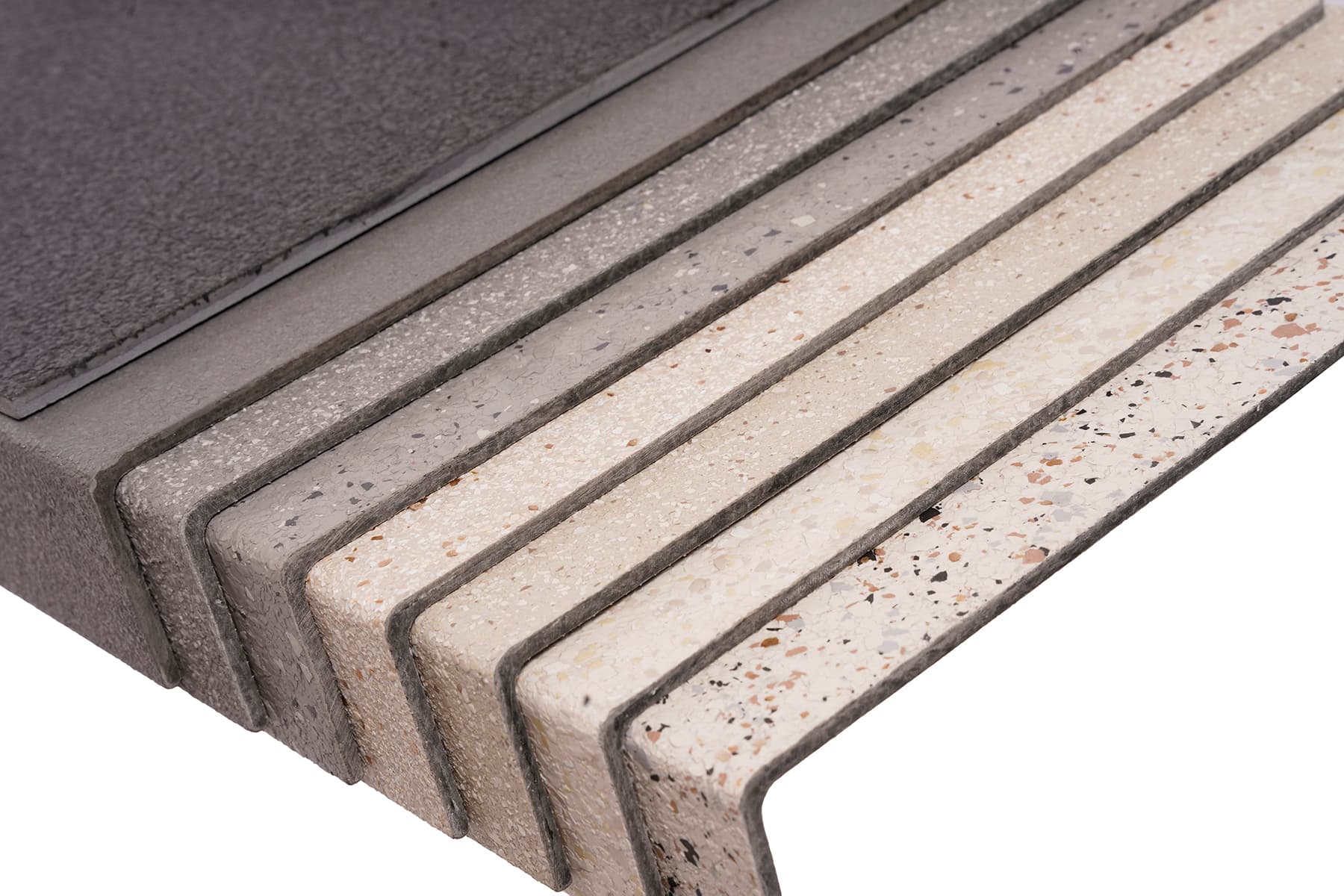
From thick wood-look overlay treads to architectural calm. In 2026, stair renovation is shifting from decoration to material experience — and the staircase is becoming part of the interior itself.
The staircase that had been waiting for a different language
Ten years ago, whoever renovated a staircase almost automatically chose a wood print. Oak, wengé, grey oak — all variations on the same theme. The industry supplied what the market asked for, and the market asked for what the industry supplied. A closed circle of thick overlay treads, aluminium edge profiles, and 3D PVC décors that imitated wood from a distance but felt like plastic on closer inspection.
In 2026, that circle has been broken open. Not by one trend, but by a fundamental shift in how people view their interior. The home has become a place where people attach more value to calm, authenticity, and material experience than to decorative convenience. And the staircase — used dozens of times a day, always visible, always touched — plays a greater role in that than ever.
This page describes the design shift underway, which materials and directions are becoming dominant within it, and how architects, interior designers, and residents can translate that shift into a stair renovation that truly connects with the architecture of their home.
From decoration to material experience — the core of the shift
From print to structure
No printed wood grains but real material depth.
From thick to thin
Ultra-thin systems that make the staircase optically slimmer.
From visible to invisible
Strips, profiles, and seams disappear from the visual field.
From cold to warm
Warm earth tones and sand tones replace cold grey and anthracite.
From decorative to architectural
The staircase as an integral part of the interior.
From imitation to authenticity
Stone and mineral structures that are what they appear to be.
The moment a staircase gives itself away
You are standing in a carefully designed living room. Plasterwork, a polished concrete floor, a kitchen in warm oak with matt black handles. Everything is right. And then the staircase. Thick overlay treads in a 3D PVC oak print with visible aluminium edge profiles on both sides. From a distance it looks acceptable. Up close, the repetition of the pattern and the plastic sheen immediately reveal that it is an imitation.
That contrast is not a detail. It is the moment at which an interior loses its credibility. And it is precisely the moment that more and more residents, interior designers, and architects are trying to avoid.
A staircase that visibly looks "renovated" is a staircase that sets itself apart from the interior instead of being part of it.
The solution is not necessarily a more expensive system. It is a different way of thinking: not treating the staircase as an object to be renovated, but as an architectural element that connects with everything around it. That calls for different materials, thinner build-up, less visible technology — and a colour and texture choice that understands the rest of the interior.
Previous generation versus new design direction
The shift is not sudden, but in 2026 it is unmistakable. Comparing the show and project photos from five years ago with what is being built and renovated today reveals a fundamentally different aesthetic.
| Aspect | Previous generation | New design direction 2026 |
|---|---|---|
| Overlay treads | Thick wood-look overlay treads | ✓ Ultra-thin architectural finish |
| Surface | Busy PVC wood prints | ✓ Calm mineral and stone structures |
| Stair nose/nosing | Aluminium edge profiles and strips | ✓ Integrated stair nosings without profile |
| Colour palette | Cold grey and anthracite | ✓ Warm sand and stone tones |
| Material philosophy | Decorative imitation | ✓ Real material experience |
| Atmosphere | Visual busyness | ✓ Minimalist calm |
| Anti-slip | Loose anti-slip strips added afterwards | ✓ Invisibly integrated grip |
| Colour choice | Standard colour selection from a brochure | ✓ Colour and texture composed to order |
Warm Minimalism — calm as luxury
The era of sterile white interiors with cold grey accents is drawing to a close. The new dominant direction in high-end interior design is described internationally as Warm Minimalism — a movement that combines minimalist clarity with warmth, tactility, and organic materials.
It is not a new colour but a new attitude towards material. Less is more — but that less must be tangible. A wall in plasterwork, a floor in polished concrete, a staircase in mineral composite: every surface contributes to a coherent atmosphere that is simultaneously calm and sensorially rich.
Material
Natural stone, lime, plaster, clay, mineral composite, untreated wood. Everything feels the way it looks.
Colour
Warm earth tones, sand tones, off-white, terracotta, sage. No cold grey, no black-and-white contrast.
Atmosphere
Boutique hotel, wellness, Japandi, Scandinavian-Mediterranean. Calm through omission, not through emptiness.
Technology
Invisibly integrated. No visible strips, profiles, or seams. Everything technical is also aesthetic.
Light
Materials respond to daylight and shadow effects. Surfaces that change with the sun are more appealing than flat prints.
Staircase
Not a conspicuous renovation element but an architectural line. Connects to floor, wall, and handrail as one composition.
The rise of stone, lime, and terrazzo
The market saturation of oak prints and PVC wood décors is real. Whoever walks through showrooms today sees it: the same pattern, the same coarse grain, the same grey tones. Consumers recognise it and want something different — not necessarily more expensive, but more original and more authentic.
Stone and mineral structures fill that need. They look calmer than wood prints, respond differently to light, and create a depth effect that a flat PVC surface can never replicate. On a sunny afternoon, a mineral structure casts small shadow patterns. In indirect lighting, the tone changes. That is not a trick — it is the fundamental property of a real material surface.
Terrazzo is making a remarkable comeback in this context. Not the busy mosaic floor of 1970s school buildings, but a refined, subtle variant with smaller mineral particles, warmer tones, and softer contrasts. In boutique hotels, luxury retail, and design apartments, terrazzo in 2026 is not a curiosity but an expectation.
| Material direction | Atmosphere | Fits with | Light behaviour |
|---|---|---|---|
| Stone Naturel | Limestone, sand tone, organic | Scandinavian, Japandi, Warm Minimalism | Subtle shadow play, matt and deep |
| Stone Blend | Layered mineral structure, nuance | Modern homes, design apartments | Lively depth effect, varying |
| Terrazzo | Refined mineral mix, warm contrast | Hospitality, boutique, luxury retail | Sparkling particles in daylight |
Stone Naturel, Stone Blend, and Terrazzo
The three material directions within the Omnistair collection have each been developed from a specific design philosophy — not as a décor option, but as an architectural choice.
Stone Naturel
Calm sand structure with a lime-like appearance and warm stone tones. Fits interiors that seek calm over statement, warmth over precision, and materiality over decoration.
Stone Blend
Architectural layering with subtle depth effect. The most versatile option: suits modern family homes, design apartments, and light project environments.
Terrazzo
Modern interpretation of a classic material. Refined mineral mix with warmer tones and softer contrasts. Strong in hospitality, boutique, luxury retail, and design homes.
Why real structure works differently from a print
A printed wood grain looks the same during the day as it does in the evening. In daylight and in artificial light. Viewed from the left and from the right. That is the limitation of a print: it is static. It imitates, but it does not respond.
A mineral structure does. Depending on the angle of the light, different shadows, different tonal values, and different depths emerge. In low winter sunlight, a Stone Naturel tread looks different from the same tread in bright summer light. In indirect LED lighting, a Terrazzo element shows different facets than in daylight. That is not a property listed in a brochure — it is something you notice in daily use, every day anew.
That dynamic makes an interior richer. Not through addition, but through the nature of the material itself. And that is precisely what Warm Minimalism pursues: more experience through fewer elements.
A material that changes with the light never ages. A print that looks the same day and night does.
The Digital Colour Studio — design to order
Personal design requires more than a colour fan. Omnistair developed the Digital Colour Studio: a design environment in which colours, structures, and mineral mixes become directly visible in combination with each other — not as abstract colour blocks, but as composite as it actually looks in reality.
That makes a fundamentally different design conversation possible. An interior designer using the colour studio sees directly how Stone Blend relates to the planned wall colour. A resident hesitating between Terrazzo and Stone Naturel can hold the two side by side and make the choice based on what they see — not on what they expect.
What the Digital Colour Studio enables:
Compare colours and structures side by side in realistic rendering. Compose Terrazzo builds with your own mineral mix and colour ratio. Determine contrast between treads, risers, and stringer panels. Share results with architect, interior designer, or installer.
Treads and risers as composition
Modern stair design approaches the staircase as a two-dimensional composition. Light risers with warmer treads create visual lightness. A darker tread with a lime-white wall adds depth. Terrazzo combined with matt earth tones makes a staircase the centrepiece without being intrusive.
For architects and interior designers
In modern residential architecture, the staircase is no longer a functional by-product. It is visible from the entrance hall, the living room, the landing — and it is touched every day. That calls for a different design approach than "choosing a colour from the brochure".
Treat the staircase as part of the material palette — not as a separate renovation project
Choose structure based on light behaviour: what lighting does the staircase receive during the day and in the evening?
Consider a composition of treads and risers in different tones for greater architectural depth
Ultra-thin systems avoid the optical heaviness that thick overlay treads cause
Integrated anti-slip and stair nosings keep the line play of the staircase calm — essential in minimalist design
The Digital Colour Studio makes the design conversation with residents more concrete and faster
Systems that combine architectural appearance with technical certainty
A staircase that looks good but becomes slippier over the years, or that loses its appearance after intensive use, ultimately delivers a design disappointment. The systems that are architecturally relevant in 2026 must serve both sides: calm appearance and demonstrable technical performance.
EverStep
Ultra-thin overlay treads in recycled stone composite. Integrated stair nosing without aluminium profile. MOHS 6–7 abrasion resistance. Available in Stone Naturel, Stone Blend, and Terrazzo.
EverStep Solid
Architectural appearance combined with NEN 7909 anti-slip and fire class Bfl-s1. SolidLux UV coating. Taber-tested to 10,000 cycles. Stone Naturel, Stone Blend, and Terrazzo.
Signature
The only fully seamless system within the Omnistair collection. Built up by hand using SolidLux UV technology. No seams, no strips, no visible transitions. Colour and texture fully custom.
GripStep Home
Integrated anti-slip in stone composite for homes. Grip running across the full stair nosing — without visible profile. Calmer than loose strips or half-moon treads. Stone Naturel, Stone Blend, Terrazzo.
Design in stair renovation — FAQ
The market is saturated with identical oak prints and grey PVC decors. Consumers are growing accustomed to the repeating pattern and the plastic sheen that betrays the imitation at close range. In high-end interiors — and increasingly in standard renovations too — the demand for more original, quieter, and more authentic materials has grown strongly. Stone and mineral textures fulfil that need in a way that wood prints cannot.
Warm Minimalism is an interior direction that combines minimalist simplicity with warmth, tactility, and natural materials. On a staircase this means: warm earth tones or stone textures, no visible strips or profiles, an ultra-thin build that makes the stair look optically slimmer, and integrated technology that is invisibly incorporated. The staircase connects to the interior rather than distinguishing itself from it.
Stone Naturel has a calm, chalky sand texture — suited to Scandinavian, Japandi, or warm minimalist interiors. Stone Blend has more architectural layering and depth — versatile and modern. Terrazzo is the most expressive option, with refined mineral particles that subtly catch the light in daylight — popular in hospitality, boutique, and design homes.
Thick overlay treads increase the build-up height and make a staircase look optically heavier. They create visible layers and call for transition profiles that interrupt the clean lines of the staircase. Ultra-thin systems — 4.3 mm — avoid all those elements. The staircase retains its original proportions, looks slimmer, and integrates more easily into the overall interior design.
Yes. A deliberate composition of treads and risers in different tones is one of the stronger design choices in modern stair architecture. Light risers with warmer treads create visual lightness. A darker tread with a lime-white wall adds more depth to the stairwell volume. The Digital Colour Studio makes it possible to explore those combinations visually before the choice is finalised.
Both. Terrazzo began its comeback in hotel and retail environments but has since firmly established itself in the residential market. Stone Naturel and Stone Blend were developed from the outset for residential use — calm enough for everyday environments, yet interesting enough to elevate an interior. The collection is suitable for every living context.
Have the right material direction assessed for your interior and staircase shape
Stone Naturel, Stone Blend, or Terrazzo — and in which composition. An Omnistair specialist helps with the material choice and works it out via the Digital Colour Studio.
This encyclopaedia page has been compiled by Omnistair on the basis of market observations, interior trends, and technical product information. Trend designations such as "Warm Minimalism" and "Japandi" are commonly used interior design terminology. Omnistair is the manufacturer of the EverStep, GripStep, and Signature system in recycled natural stone composite (patent NL2039653).